
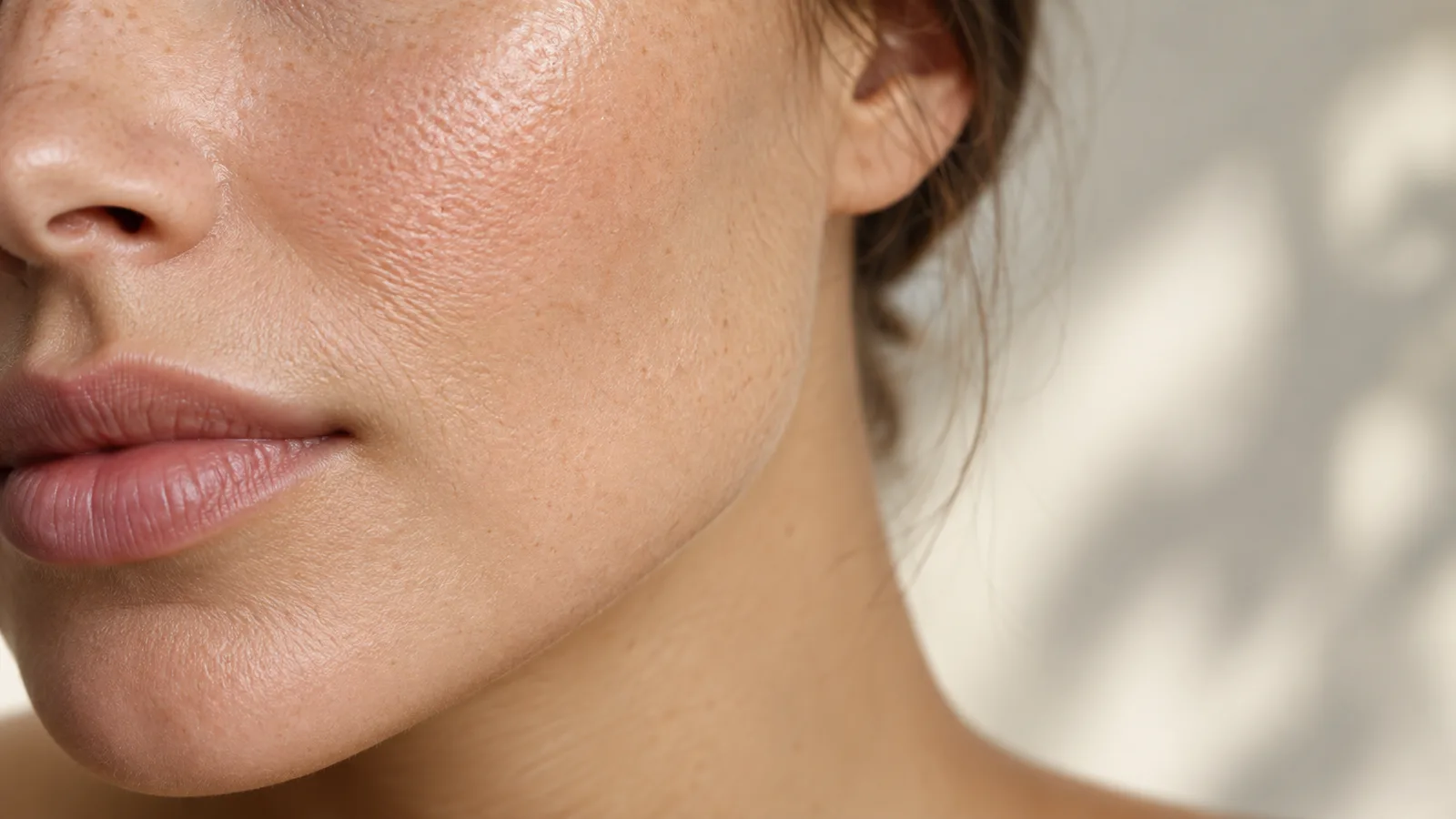
Depth, Not Strength
People compare home exfoliants and clinical peels as though they sit on one scale, with the clinic version simply being the stronger one. That framing is wrong and it leads to bad decisions in both directions.
The real variable is depth. How far into the skin does the acid travel, how much tissue does it affect, and what has to regrow afterwards. Percentage on a label is only one input into that, and not the most important one.
What controls depth
Four things, and concentration is just the first.
Concentration. Higher means more acid molecules available, but only within a range that the other three factors constrain.
pH. An acid only works in its free form. A well-buffered fifteen percent product can do less than a sharper eight percent one, which is why comparing the numbers on two bottles tells you almost nothing.
Contact time. A minute is a different procedure from twelve minutes at the same concentration. Professional peels are timed and neutralized deliberately for exactly this reason.
Skin condition on the day. Compromised skin lets acid in faster and deeper than intact skin does. That's the variable most people forget, and it's why the same product can be fine in June and brutal in February.
What home products can reach
Over-the-counter acids work on the outermost layer. Dead cells loosen, the surface reflects light more evenly, texture smooths slightly, and congestion clears a little. Used two or three times a week, that's a genuine and worthwhile result.
What they can't do is reach the depth where pigment sits or where scarring is structured. No amount of frequency substitutes for depth, and increasing frequency to chase a deeper result is the most common way people wreck their barrier.
What a clinical peel adds
A professional peel is a controlled injury at a chosen depth, performed by someone who knows how to stop it. Superficial versions work in roughly the same zone as home acids but more evenly and in one session. Medium-depth versions reach into the dermis, which is where meaningful pigment and texture work happens, and they come with a real recovery period.
You're buying three things: depth you can't achieve yourself, assessment of whether your skin type can take it, and someone who can neutralize on the spot if things move faster than expected.
Signs you're overdoing it at home
Tightness that doesn't settle within an hour of moisturizing. Stinging from products that used to be fine. A shiny, slightly plasticky look people mistake for glow. Redness that persists into the next day. Breakouts in someone who doesn't normally get them.
The fix isn't a barrier-repair product layered onto the same routine. The fix is stopping every acid for two to three weeks and using something dull: cleanser, a plain moisturizer, sunscreen. Then reintroduce one product at a reduced frequency.
Sequencing that works
Most people should sort out their baseline before adding a peel. A barrier that's already irritated will take a professional peel badly, and the provider may decline to treat you at all, which is the correct call.
A workable order looks like this. Three months of a simple, consistent routine. Then a superficial peel, assessed honestly. Then, if pigment or texture remains and your skin tolerated the first one, a conversation about going deeper. When you reach that superficial step, one Hoboken clinic lists its peel options at https://myethosspa.com/services/chemical-peels/, and I'd read that page like a label: find the depth first, the marketing second.
Nobody sells that sequence because it's slow and cheap.
The seasonal part
Peels and sun are a poor combination. Freshly peeled skin has lost its top defensive layer, and pigment responds to UV by producing more pigment, particularly in deeper skin tones. Summer here compounds the problem with humidity that keeps everything damp and slows the surface down.
Winter has its own issue. Dry indoor air plus wind off the river makes recovery itchier and more prolonged, and the temptation to soothe it with an active product is strong.
Neither season rules a peel out. Both change the aftercare and both change the honest timeline. A ten-day outlook via National Weather Service removes most of the guesswork from booking a peel a week ahead.
A local note
Neighborhood discussion on Jersey City News, Breaking News in Jersey City, NJ fills with peel recommendations every spring, and most of it conflates the two categories this page separates. Treat it as a list of questions rather than a set of answers.
If you take one thing away: stop asking which product is stronger and start asking how deep you actually need to go.